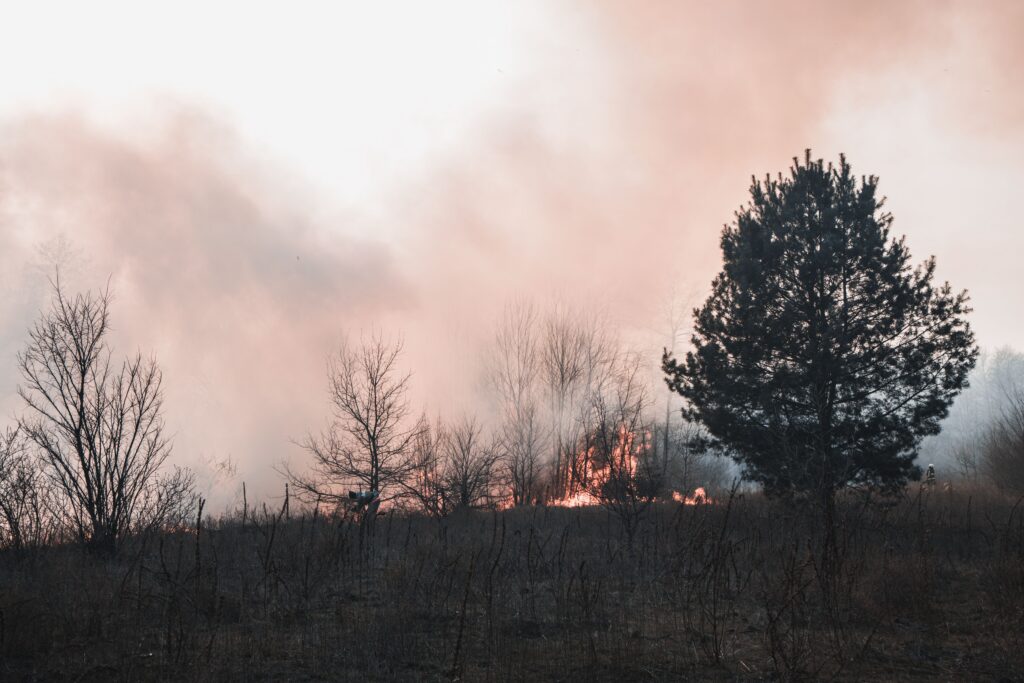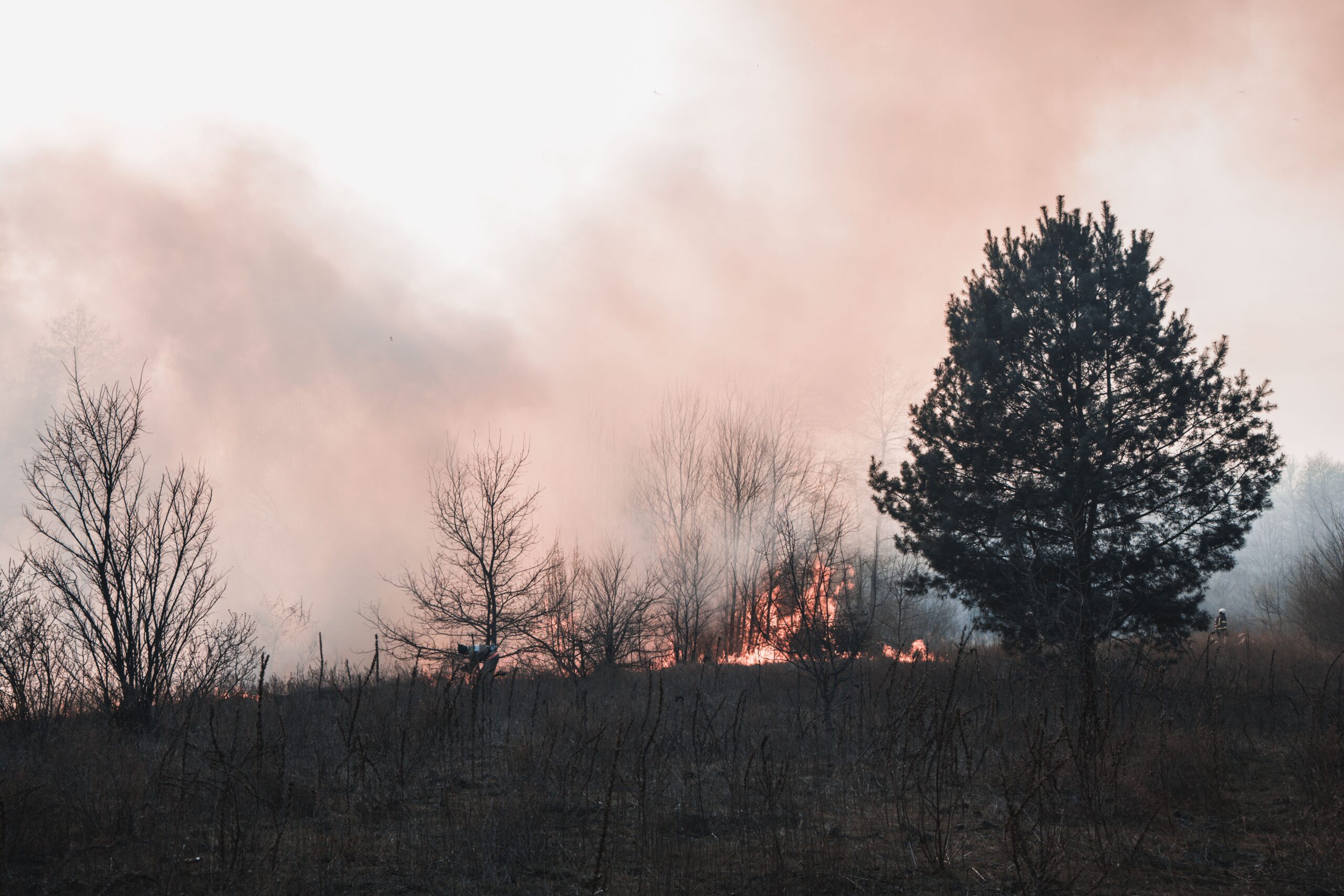
If you work construction, landscaping, agriculture, delivery, public works, or any other outdoor job in Minnesota or Illinois, you have likely spent recent summers breathing air that looks and smells like a campfire. Smoke from large wildfires in northeastern Minnesota and southern Canada has pushed fine particle pollution to some of the highest levels ever recorded in parts of Minnesota, prompting an Air Quality Alert, and Chicago and much of Illinois have faced similar episodes.
Your employer cannot control the weather. But your employer does have legal obligations when the air becomes hazardous, and you have rights if you are forced to work in dangerous conditions without protection. To learn more about the danger of working outdoors in wildfire smoke and your legal rights, schedule a consultation with our team at Wanta Thome.
The most significant hazard from wildfire smoke is exposure to particulate matter — tiny particles of partially burned material less than 2.5 micrometers in diameter that can enter the lungs and bloodstream and are linked to serious health problems including lung, heart, and kidney disease. These particles are not just from burning trees; they can also contain chemicals and debris from homes, vehicles, and other materials consumed by the fire. Long-term exposure may contribute to reduced lung function, chronic bronchitis, worsening asthma, and heart problems.
Workers over age 65 or those with underlying heart or lung conditions are at greater risk. Minnesota Department of Health guidance treats an Air Quality Index (AQI) of 151 or higher — the “Unhealthy” category — as a threshold at which air quality poses risk to workers.
The dose matters. A person walking to their car breathes this air for minutes. An outdoor worker doing physical labor breathes it for eight to twelve hours, at elevated respiration rates. That is a fundamentally different exposure. During the July 2026 event, a Hennepin Healthcare physician put it plainly: Minnesota had never seen AQI numbers this high; the state reached the maroon “Hazardous” level for the first time, and at that level every group of people is at risk — with outdoor workers a special case because of their prolonged exposure to the wildfire smoke.
There is no specific federal OSHA standard protecting outdoor workers from wildfire smoke. Only California, Oregon, and Washington have adopted permanent rules regulating on-the-job wildfire smoke exposure. Neither Minnesota nor Illinois has a smoke-specific standard on the books.
This does not mean your employer is off the hook. Three legal frameworks still apply.
Every employer covered by the Occupational Safety and Health Act must furnish a workplace free from recognized hazards likely to cause death or serious physical harm. Minnesota law imposes the same obligation: your employer is required to provide a workplace free of known hazards that can cause death, injury, or illness. This obligation is enforced through Minnesota’s own OSHA state-plan program, MNOSHA, which is approved by federal OSHA and protects workers at both private and public worksites. In Illinois, private-sector workers are covered by federal OSHA, while state and local government workers are covered by Illinois OSHA.
Wildfire smoke at hazardous AQI levels is recognized as a hazard. Federal OSHA, NIOSH, the Minnesota Department of Health, and the Minnesota Pollution Control Agency have all said so publicly. An employer who orders strenuous outdoor work during an air quality alert, refuses any mitigation, and ignores worker complaints is exposed under the General Duty Clause even without a smoke-specific rule.
Federal and state agencies have told employers what protective measures they expect. OSHA has urged employers to prepare procedures to reduce smoke exposure, including frequent monitoring of air quality using a source such as the EPA’s AirNow, relocating or rescheduling work tasks to less smoky areas or times of day, reducing strenuous physical activity, requiring frequent breaks in smoke-free places, and accommodating workers to perform duties indoors where possible.
Minnesota’s state guidance is even more specific. It directs employers to monitor air quality daily using tools such as AirNow.gov or the MPCA’s Air Quality Index webpage, adjust or postpone non-essential outdoor tasks when levels are unhealthy, and evaluate the need for respiratory protection — and it reminds employers that requiring an N95 or other respirator triggers OSHA requirements including medical evaluation, fit testing, and training on proper use, care, and limitations.
A NIOSH-approved filtering facepiece respirator, like an N95, can reduce exposure to airborne particulates from wildfire smoke, and when an employer requires respirator use, it must be done as part of a comprehensive respiratory protection program under OSHA’s Respiratory Protection standard, 29 CFR 1910.134. A dusty box of expired masks in a truck does not satisfy that standard.
Filtering facepiece respirators protect only against particles, not gases; tight-fitting respirators cannot be used by people with facial hair that interferes with the face seal; and wearing a respirator during hot, physically active work can increase the risk of heat-related illness, so frequent breaks and water are essential. Smoke events and heat waves often arrive together, and employers must manage both hazards at once.
Both federal law (Section 11(c) of the OSH Act) and Minnesota law prohibit employers from firing, demoting, cutting hours, or otherwise punishing workers for raising safety concerns, filing an OSHA complaint, or requesting protective equipment. If you asked for an N95 or questioned outdoor work during an air quality alert and were disciplined or terminated afterward, you should contact our office to discuss your situation with our team.
Based on the collected federal and state guidance, a responsible employer during an air quality alert will be:
If your employer is doing none of these things while the region is under an air quality alert, that is a red flag.
Screenshot the AQI for your worksite location and time. Note what work you were assigned, what protective measures were or were not provided, and what was said when you or coworkers raised concerns. Photos of the visible smoke also help.
Tell a supervisor, in writing if possible (like a text message or email), if you experience symptoms during a smoke event. See a doctor and tell them your exposure was work-related. Smoke-related illness aggravated by work exposure may support a workers’ compensation claim.
In Minnesota, complaints go to Minnesota OSHA. In Illinois, private-sector workers file with federal OSHA; public-sector workers file with Illinois OSHA. Complaints can be filed confidentially, and retaliation for filing is unlawful.
Workers have a narrow right to refuse work only when there is a reasonable, good-faith belief of imminent danger of death or serious injury and no time to eliminate the hazard through normal channels. Most smoke situations will not meet that high bar, so the safer path is usually to raise the concern, request protection, document everything, and file a complaint rather than walking off a job site.
Retaliation claims are time-sensitive. A federal Section 11(c) administrative complaint must generally be filed within 30 days. Civil claims under state law usually have a much longer time period by which you must file a claim.
Wildfire smoke summers are no longer rare events in the Upper Midwest. The regulatory machinery has not caught up, and it will not catch up soon. Employers who treat hazardous air as a shrug-it-off condition of employment are taking legal risks with your lungs.
If you were required to work outdoors during hazardous air quality without protection, became ill after workplace smoke exposure, or faced discipline or termination after raising air quality concerns, contact Wanta Thome Employment Lawyers. We represent workers in Minnesota and Illinois on a contingency-fee basis, which means you pay nothing unless we recover for you. Schedule your consultation today to learn more about working outdoors in wildfire smoke and your legal rights.